Why Does My Hair Color Look Flat in Dry Air?
Your balayage can look identical to a friend's in Portland. Back in Bend, it reads flatter within a few weeks. Same formula. Same stylist. Different air.
Why does my hair color look flat in dry air?
Bend's dry, high-desert air pulls moisture out of the hair shaft faster than a coastal climate does, and that dehydration lifts the hair's outer cuticle layer. A lifted cuticle scatters light instead of reflecting it. So a balayage or dimensional color that looks glossy right after your appointment can look flat and matte within two to three weeks, even though the pigment underneath hasn't changed.
Think of a wet river rock next to the same rock dried in the sun. Same color. Completely different look. Hair works the same way. When the air around a strand is drier than the strand itself, the hair gives up moisture. The cuticle scales lift slightly, like tiny shingles standing up off a roof instead of lying flat.
Dimensional color depends on two things: contrast between the ribbons of color, and shine to show that contrast off. Take the shine away and the ribbons blur together. Blondes read ashy and chalky. Brunettes lose depth and start to look muddy, even though nothing in the formula changed. Reds look dusty instead of rich.
There's a second effect people miss. Dry air plus a wool hat equals static. Flyaways lift off the head, catch light at odd angles, and make careful lowlights look frizzy instead of blended.
Indoor air makes this worse. Once a furnace or heat pump runs to keep a house or office warm, indoor humidity drops even lower than the dry air outside. Color that looked fine on the drive home can start to look tired after a few days spent mostly indoors. This isn't tied to a season. It happens anytime indoor heating runs, and in a lot of Bend homes and offices, that's most of the year.
We cover the wider picture, including UV and fade, in our full breakdown of climate-built color in Bend. This piece stays on one part of that puzzle: reflection, and what restores it. If you're not sure how to describe a dull look to your stylist, our guide on what to tell your stylist in a consultation covers the words that get you the right fix faster.
What happens to the cuticle, and why a gloss matters more than a toner
A gloss seals the cuticle down while a permanent toner opens it up, and in Bend's air that difference decides whether your color still shines in week three. A lot of guests assume "toner" and "gloss" are the same appointment. They aren't, and the gap matters more here than almost anywhere else we've formulated color.
A permanent toner or color service uses a stronger developer, often with ammonia, to lift the cuticle open so pigment can get inside the hair shaft. That's necessary work when you're lightening hair or making a real color change. But opening the cuticle also adds porosity, and porous hair loses moisture faster in dry air. Every lift is a small trade. You get the color change, and you get a cuticle that needs help closing back down.
A demi-permanent gloss works differently. It uses a much lower volume developer and little to no ammonia. Its main job is depositing tone on the surface and just inside the cuticle rather than lifting anything. Because it doesn't force the cuticle open, it helps lay those raised scales back down. That's the mechanical reason a gloss restores shine instead of just adding tint.
- What it does. Demi-permanent gloss: Deposits tone, adds shine, minimal lift. Permanent toner or color: Lifts existing pigment and deposits new color.
- Developer strength. Demi-permanent gloss: Low volume, little or no ammonia. Permanent toner or color: Higher volume developer, usually ammonia based.
- Effect on the cuticle. Demi-permanent gloss: Helps seal it down. Permanent toner or color: Opens it further, adds porosity.
- How long it holds. Demi-permanent gloss: Four to six weeks before it fades. Permanent toner or color: Grows out with your natural hair.
Skip the gloss step, and you're relying on a lifted cuticle to close on its own in air that's working against it. It won't happen fast enough. That's the mechanism behind almost every "my color looked great for a week, then went dull" complaint we hear.
How do we formulate for it?
We check porosity first, build extra depth into the formula, and finish every lightening service with a gloss. That's the short version of how we approach color for this climate. We refined it at our Alamo home salon since 2012 and adapted it for the guests we see at our Bend chair inside Tangerine Hair Salon downtown.
Here is what happens in the chair, step by step.
- We run a porosity check before any bowl gets mixed. We mist a section of your hair and watch how fast it drinks the water. Hair that soaks it up in seconds is highly porous, which in Bend usually means it's already somewhat dehydrated. That hair grabs toner unevenly and lets it go fast, so we adjust the formula and the timing up front.
- We build in depth, not just brightness. Dry air will cool and flatten a color on its own over time. So we keep the end target a shade richer than the inspiration photo. Not warmer. Richer. A blonde still reads blonde, but the lowlights carry more weight so the dimension survives past week three. This is the opposite of what most guests expect us to say. It's also the most common reason color that looked right somewhere else starts to look off once someone moves here.
- The gloss isn't optional. Every lightening service in our chair ends with a demi-permanent gloss, for the mechanical reasons above. It lays the cuticle flat and helps hold moisture in rather than opening the shaft further.
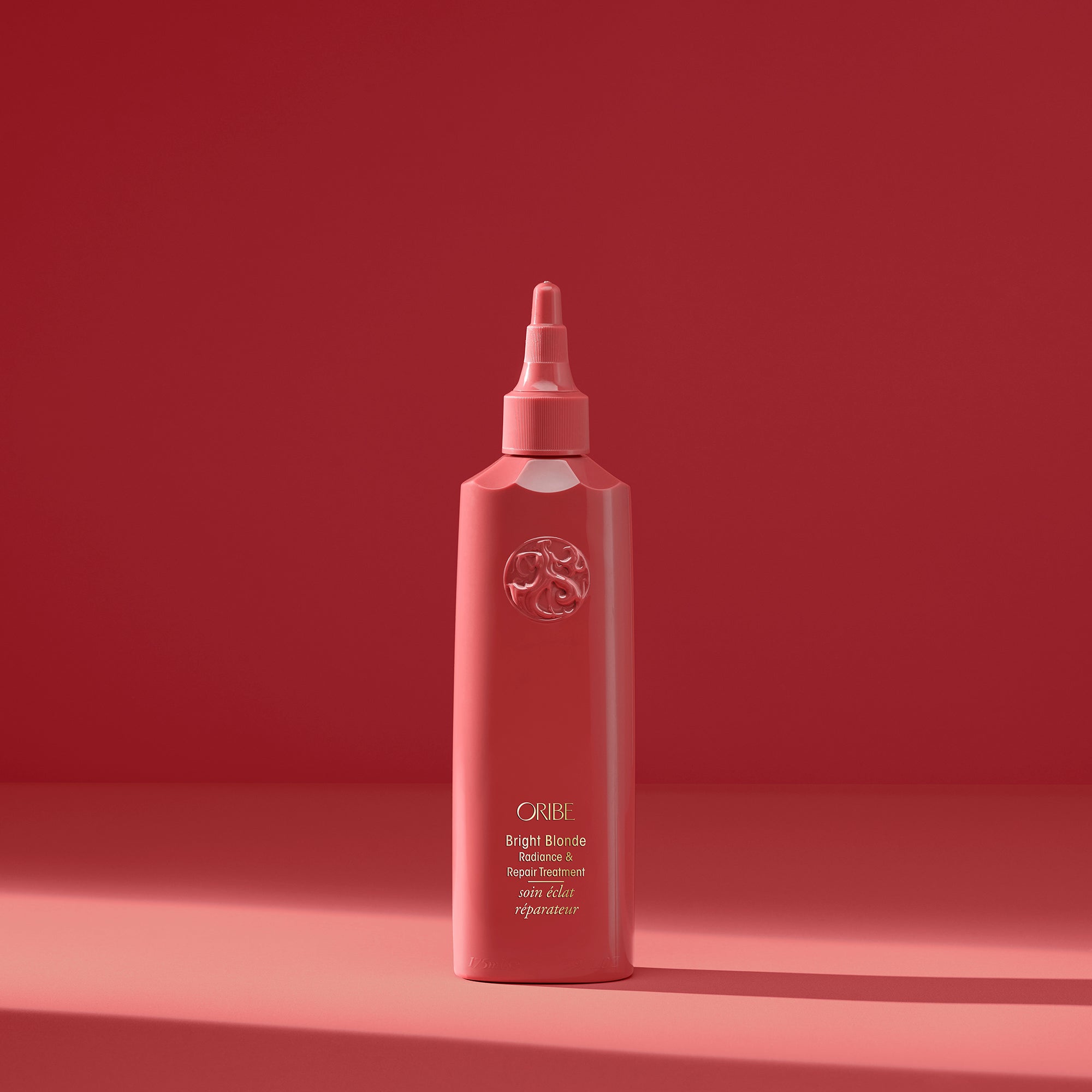
- We treat at the bowl. We use Oribe, the line we're authorized to carry, and follow it with an Oribe leave-in before any heat touches your hair.
- We finish dry with protection, not just product. A blow dry over untreated, dehydrated ends bakes in the exact flatness we're trying to prevent. We use a heat protectant first and keep tools cooler on fine or highlighted hair, closer to 350 degrees instead of pushing 450.
- We set your return schedule at checkout, not six weeks later. A standalone gloss every six to eight weeks is what keeps full color visits spaced four to six months apart. That spacing is the entire premise of lived-in color. Skip that gloss window and the stretch between full appointments gets shorter. You also spend more time and more money fixing dullness a gloss would have prevented.
Plan on three to four hours for a full balayage with gloss in our Bend chair. You leave with hair that looks glassy. Two weeks later, if you follow the care below, it still reads dimensional. Skip the care and it starts to go matte around day ten. That's not the color failing. That's the cuticle opening back up.
What changes between week one and month four
Shine drops before pigment does, and the second week is where it starts. We tell every color guest this at checkout, because knowing the rhythm is what keeps them from panicking at day fourteen and booking a color service they don't need.
- Week one. The color is at its best. The cuticle is sealed from the gloss, shine is high, and the contrast between ribbons is sharp.
- Weeks two and three. Without a gloss refresh, dry indoor air starts lifting the cuticle again. Shine drops first. The color itself hasn't faded yet. It just stops reflecting light the way it did on day one.
- Weeks four to six. This is where a standalone gloss appointment resets the clock, without touching your base color or lightening anything.
- Months four to six. This is when we're usually looking at a full color revisit, assuming the gloss schedule was kept in between.
- Week 1 look. Coastal guest: Glossy, high contrast. Bend guest: Glossy, high contrast.
- Week 3 look. Coastal guest: Still reflective. Bend guest: Flatter, ribbons start to blur.
- What we change. Coastal guest: Nothing extra. Bend guest: Added depth, gloss schedule, leave-in routine.
The guests who get the full four to six month stretch out of their color almost always have one thing in common. They came back for the standalone gloss instead of waiting until the color looked obviously dull.
What happens in our Bend chair
We're inside Tangerine Hair Salon at 10 NW Minnesota Ave in downtown Bend, and we bring the same climate-built approach up from our Alamo home salon two weeks out of every month. Walk in and it's a working salon chair, not a satellite outpost. The same porosity check, the same product line, the same gloss step happens here as it does at our home studio.
Every Bend consultation starts the same way. You text us a photo of your current hair and an inspiration picture, we send you a plan, and then you book your visit for the next set of Bend dates.
Because the Bend schedule runs two weeks a month, timing your gloss appointment matters more here than it would somewhere we're in the chair daily. If your full color lands early in a visit window, we'll usually book your standalone gloss for the following month's Bend dates rather than let six or eight weeks stretch into ten. Ask about this at checkout. We'll set the next date before you leave. You can see how gloss and dimensional results hold up week to week on our Instagram before you book.
If you're coordinating color with extensions, we handle both in the same visit rather than splitting you between two stylists. Our piece on why we do color and extensions in one chair covers how that scheduling works. And if dimension and bronde-style color is what you're after rather than a full balayage, our approach to bronde and dimensional color walks through how we build it for the same reflective result.
What do people get wrong about dry hair and color?
The biggest mistake is treating a dull look like a color problem and asking for a stronger tone. It's a moisture and cuticle problem. A darker or warmer formula on dehydrated hair just gives you a darker, matte finish instead of a brighter, flat one. Same issue, worse trade.
A few more we see every week:
- Washing more often. Dry air makes the scalp feel tight, so guests wash daily to feel clean. Every wash lifts the cuticle a little and rinses out some conditioning. Twice a week is plenty for most of our color guests here. Use a dry shampoo in between. If you've been reaching for a drugstore bottle labeled color-safe, it may still be part of the problem.
- Piling oil onto dry hair. Oil sits on top of a lifted cuticle. It doesn't get in. Then it catches light and heat and the hair looks greasy and dull at the same time. Apply a light oil to damp hair, mid-length to ends, and let the blow dry seal it in.
- Full-heat tools on already-stressed hair. Dehydrated hair doesn't need 450 degrees. We set irons closer to 350 on fine or highlighted hair, always with a heat protectant first.
- Skipping the gloss between color appointments. A standalone gloss every six to eight weeks resets the cuticle. It's exactly what keeps your full color visits four to six months apart.
- Brushing dry hair hard. Dehydrated strands snap easier, and static makes them cling to the brush. Work through tangles with a wet brush on damp, conditioned hair instead of fighting it dry.
- Ignoring hard water on top of dry air. Mineral buildup is a separate issue, and so is UV fade. Neither one is what makes color look flat in the first two weeks. That's almost always moisture, first.
Skip the porosity check entirely and book a stronger formula on your own, and the most common outcome we see is a correction visit a month or two later. That means more chair time spent undoing uneven tone than it would have taken to formulate it right the first time.
Frequently Asked Questions
Does Bend's dry air make hair color fade faster?
Not in the way most people mean. Dry air changes how color reflects light more than it pulls pigment out of the hair. Fade from sun and washing is a separate process. A dull look at week two is usually dehydration, which a gloss and a leave-in routine fix without a new color service.
I moved here from a wetter climate. Will my old color formula still look right?
Usually it needs a small adjustment. The same formula tends to read flatter and cooler here than it did somewhere more humid, so we build in extra depth and end with a gloss. Bring photos of your hair from before the move so we can see what you liked, and we'll tell you plainly what needs to shift and what can stay the same.
How often should I deep condition in Bend?
Once a week for most color guests, and closer to twice a week once indoor heat runs regularly. Leave a mask on for ten minutes in the shower, then follow with a leave-in on damp hair before you blow dry.
Does dry air affect the color on extensions too?
Yes, often more, since extension hair has no scalp oil feeding it. We're certified in multiple methods and built our own way of installing from that, matched at your consultation to your head shape and density. Whatever the install looks like on you, the added hair gets the same gloss and leave-in routine as your natural hair, brushed gently with oil kept off the base.
Can a leave-in alone fix flat-looking color, or do I need a salon gloss?
A leave-in helps daily, but it won't rebuild what a lifted cuticle has already lost. A salon gloss deposits tone and seals the cuticle in one step, which is why we treat it as part of the color service, not an optional add-on.
Can I book a gloss appointment on its own, without a full color service?
Yes, and for most guests here that's the appointment doing the real maintenance work. A standalone gloss every six to eight weeks resets shine and cuticle condition without touching your base color. It's what keeps your full color visits spaced months apart instead of weeks.
How long does a full balayage with gloss take at the Bend chair?
Plan on three to four hours. That covers the porosity check, the lightening service, and the finishing gloss, plus the conditioning and leave-in steps that protect the result once you walk out the door.
Ready for color that keeps its shine in Bend?
Color built for the high desert should look the same in week three as it did walking out the door. That's the standard we hold at our Bend chair, where we take guests two weeks each month. Text us a photo of your current hair and an inspiration picture, and we'll send you a plan before you ever sit down. When you're ready, book your color consultation and we'll start with the porosity check. And follow along on Instagram to see how the results hold up week to week.